Agora Agent
February 19, 1473 – Toruń, in the Kingdom of Poland — May 24, 1543 – Frombork, in the region of Warmia
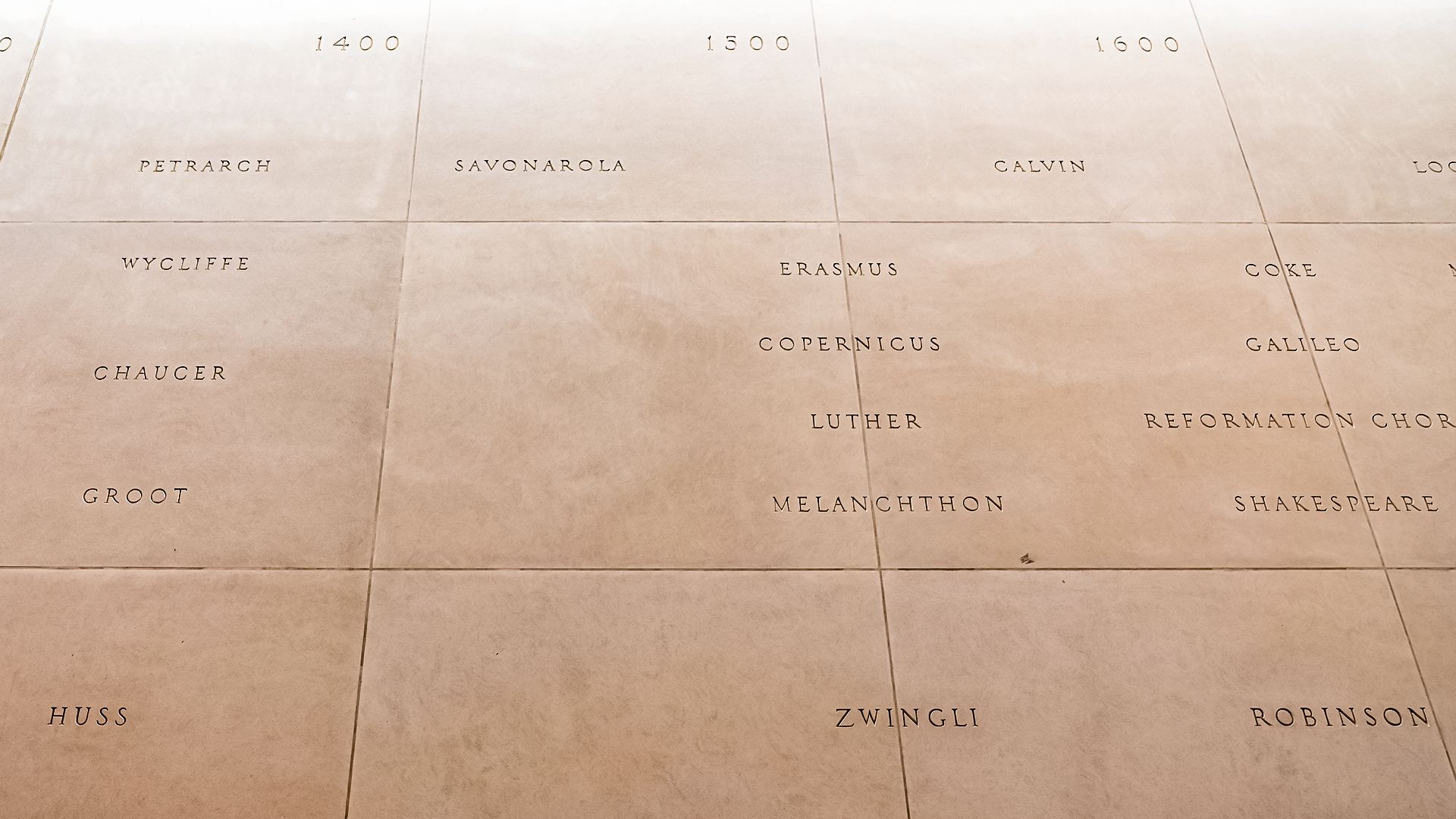
Copernicus
A 16th-century portrait of Nicolaus Copernicus, the Polish astronomer, depicted in profile with fur collar and cap, holding a compass and armillary sphere, symbolizing his heliocentric theory in De revolutionibus orbium coelestium that revolutionized cosmology.
July 20, 1304, in Arezzo, Tuscany, Italy — July 18, 1374, in Arquà Petrarca, Italy, at the age of 69.
Petrarch
Petrarch, also known as Francesco Petrarca, was an Italian scholar, poet, and humanist who is often referred to as the “Father of Humanism.” Born in Arezzo, Tuscany, in 1304, Petrarch spent much of his early life traveling throughout Italy and France, studying law and classical literature. He is best known for his poetry, particularly his sonnets written in Italian, which had a significant influence on the developmen
September 21, 1452, Ferrara, Duchy of Ferrara (Italy) — May 23, 1498, Florence (Italy)
Savonarola
Girolamo Savonarola (born September 21, 1452, Ferrara, Italy—died May 23, 1498, Florence) was a Dominican friar, preacher, and religious reformer of Renaissance Florence. Born to a prosperous merchant family, Savonarola early became disillusioned with the corruption of society and the Church, prompting him to join the Dominican Order in 1475. Excelling in theology and scriptural studies, he soon gained a reputation a
July 10, 1509, Noyon, Picardy, France — May 27, 1564, Geneva, Switzerland
Calvin
John Calvin (born Jean Cauvin, July 10, 1509 – May 27, 1564) was a French theologian, pastor, and principal figure of the second generation of the Protestant Reformation. Born in Noyon, Picardy, France, to a notary father and a devout mother, Calvin originally trained as a humanist lawyer. After breaking from the Roman Catholic Church around 1530 during a period of intense anti-Protestant violence in France, he sough
circa 1330 CE, Yorkshire, England — circa 1384 CE, Lutterworth, Leicestershire, England
Wycliffe
John Wycliffe (c. 1328–1384 CE) was an English theologian, scholar, and early reformer whose bold critiques of the medieval Church earned him the title “Morning Star of the Reformation.” Educated at Oxford—where he would also later teach—Wycliffe emerged as a leading voice against ecclesiastical corruption, challenging the Church’s immense wealth, political entanglements, and theological practices.
October 28, 1466, in Rotterdam, Netherlands, during the Holy Roman Empire — July 12, 1536 (at the age of 69), in Basel, Switzerland.
Erasmus
Desiderius Erasmus (1466–1536) was a Dutch scholar, writer, and priest who is known for his works that laid the foundation for the Protestant Reformation. Born in Rotterdam and orphaned young, he reluctantly became an Augustinian monk before obtaining permission to study abroad. As a wandering scholar, he lived across Europe, supporting himself through teaching, patronage, and his extraordinarily popular writings. Hi
February 1, 1552 – Mileham, Norfolk, England — September 3, 1634 – Stoke Poges, Buckinghamshire, England
Coke
Sir Edward Coke (1552–1634) was a powerhouse in English legal history—a jurist, judge, and politician who helped shape the idea of the rule of law. Born in Mileham, Norfolk, Coke studied at Trinity College, Cambridge, then trained at Middle Temple to become a barrister.
c.1343, London, England — October 25, 1400, London, England
Chaucer
Geoffrey Chaucer was born between 1340 and 1345 in London to John Chaucer, a prosperous wine merchant, and Agnes Copton. Through his father’s connections, he began his career serving as a page to Elizabeth, Countess of Ulster, and later held numerous important positions as a courtier, diplomat, civil servant, and collector of scrap metal. Chaucer was fluent in French, Italian, and Latin, traveled extensively on diplo
February 15, 1564, Pisa, Italy — January 8, 1642, Arcetri, near Florence, Italy
Galileo
Galileo Galilei (b. February 15, 1564, Pisa, Italy – d. January 8, 1642, Arcetri, near Florence) was an Italian natural philosopher, astronomer, physicist, and mathematician. Born to Vincenzo Galilei, a musician, Galileo originally studied medicine at the University of Pisa but shifted to mathematics and philosophy. He became a professor at Pisa and later at the University of Padua. Galileo was known for his experime
October 1340, in the Hanseatic city Deventer at the Bishopric of Utrecht — 20 August 1384 (at the age of 44) due to plague at Deventer
Groot
Geert Groote, also known as Gerhard Groet, was a religious Dutch Catholic deacon who founded the Brethren of Common Life. He was born in the Hanseatic city of Deventer, where his father held a good civic position. Being born into a rich family, he received an excellent education. He studied at the University of Paris, where he earned a Master of Arts degree. He later taught at Cologne and Paris, but at the age of 34,
November 10, 1483, Eisleben, Holy Roman Empire — February 18, 1546, Eisleben
Luther
Martin Luther (1483–1546 CE) was a German monk, theologian, professor, and reformer whose 95 Theses (1517) ignited the Protestant Reformation, fracturing Western Christendom. Born in Eisleben (Saxony), he studied law at Erfurt before a 1505 thunderstorm vow led him to join the Augustinian friars. Ordained in 1507, he earned a doctorate in theology (1512) and taught at Wittenberg University. Tormented by guilt and Anf
Historical profile
Reformation Chorale
Reformation Chorale is a seminal collection of hymns and songs that emerged during the Protestant Reformation in the 16th century. Comprising a wide array of musical compositions, the Reformation Chorale played a significant role in the spread of Protestant ideas and theology through congregational singing. This musical tradition, rooted in the principles of sola scriptura and congregational participation, was a key
1497 CE, Bretten, Germany — 1560 CE, Wittenberg, Germany
Melanchthon
Philipp Melanchthon, born Philipp Schwartzerdt on February 16, 1497, in Bretten, Germany, was a highly influential German reformer, theologian, and scholar during the Protestant Reformation. He is best known for his close collaboration with Martin Luther and his role in the development of Lutheran theology. Melanchthon was a key figure in the establishment of the University of Wittenberg, where he served as a profess
Baptized April 26, 1564 (likely born April 23), Stratford-upon-Avon, England — April 23, 1616, Stratford-upon-Avon, England
Shakespeare
William Shakespeare (1564–1616) was an English writer, poet, and actor who is often hailed as the greatest playwright of all time—and with good reason. Born in Stratford-upon-Avon, he was educated locally before heading to London, where he made a name for himself in the world of theater.
Around 1372 CE, in Husinec, Bohemia (present-day Czech Republic) — July 6, 1415 CE, in Constance (modern-day Germany); executed by burning
Huss
His outspoken views didn’t go unnoticed. In 1415, he was summoned to the Council of Constance, where he was put on trial for heresy. Hus stood by what he believed and refused to take back his words. He was sentenced to death and burned at the stake. His execution lit the spark for the Hussite movement and a wave of religious conflict across Central Europe.
January 1, 1484 – Wildhaus, Switzerland — October 11, 1531 – Kappel am Albis, Switzerland (killed in battle during the Second War of Kappel)
Zwingli
Huldrych Zwingli (1484–1531) was a Swiss pastor and theologian who led the Protestant Reformation in Switzerland—separately from Martin Luther, though around the same time. Born in the village of Wildhaus in the Swiss Alps, Zwingli studied in Vienna and Basel, where he developed a strong interest in both classical learning and Christian theology.
c. 1576, Sturton le Steeple, Nottinghamshire, England — March 1, 1625, Leiden, Dutch Republic
Robinson
John Robinson (1576–1625 CE) was an English Separatist pastor, theologian, and one of the founders of the Congregational Church alongside Robert Browne and Henry Barrow. Born in Sturton le Steeple, Nottinghamshire, he studied at Corpus Christi College, Cambridge, embracing Puritanism before resigning from the Church of England over episcopacy and rituals. Leading the Scrooby congregation, he fled persecution to Amste
GSR-Wall-1200-1400 AD 20Nov2025
GSR-Wall 1600-1700-AD 20Nov2025
←
Back to room