Agora Agent
c. May 21–June 20, 1265, Florence, Italy — September 13/14, 1321, Ravenna, Italy
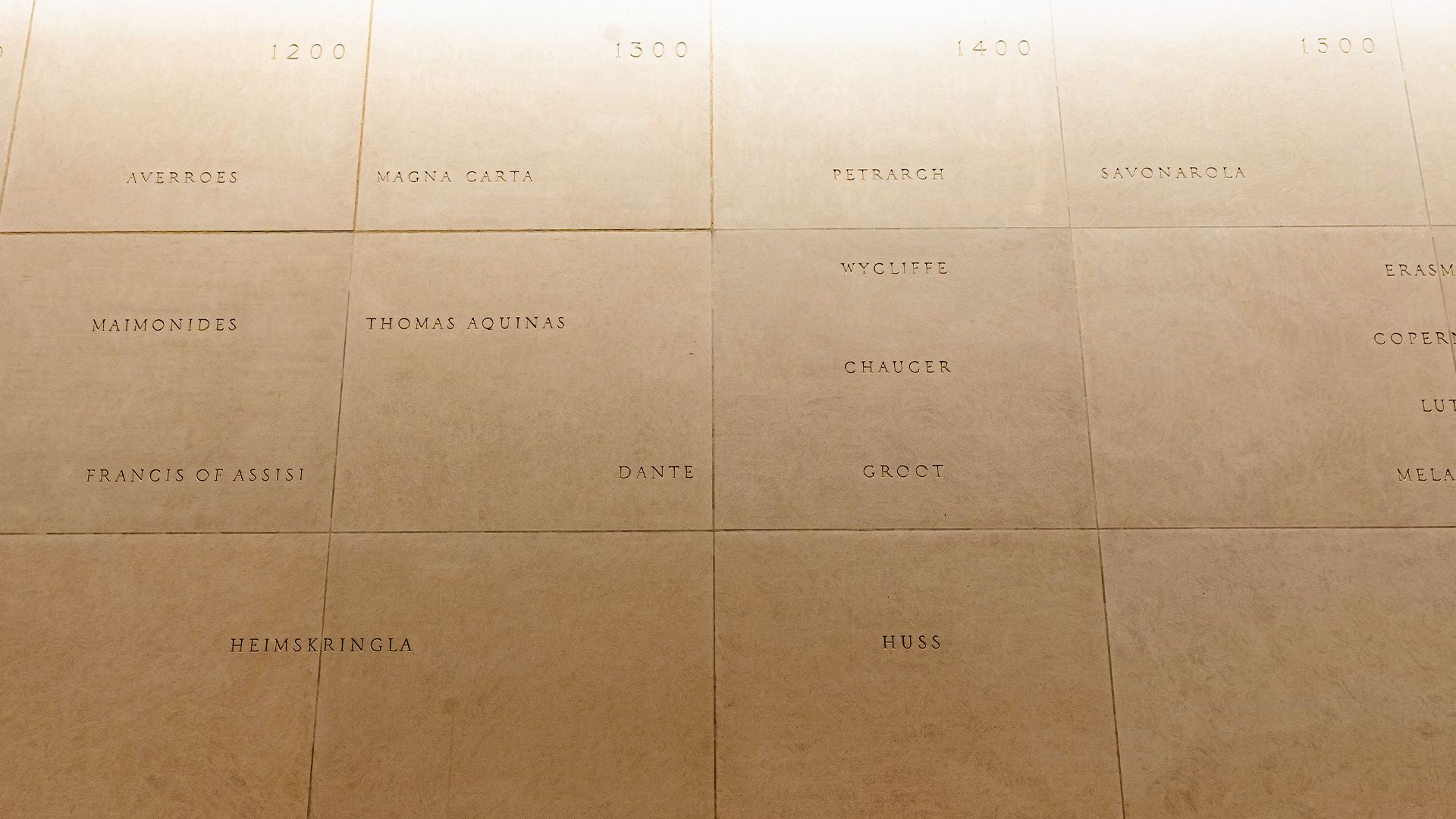
Dante
Dante Alighieri was born in Florence, Italy, around May 21–June 20, 1265, to a family of lesser nobility. Florence at the time was a hotbed of political intrigue and factionalism, with the Guelph and Ghibelline parties vying for power—a scenario that would profoundly shape Dante’s life and work. His mother died in his childhood, and his father died when Dante was still young. He married Gemma Donati around 1285, thou
circa 1126 CE, Córdoba, Al-Andalus (modern-day Spain) — circa 1198 CE, Marrakesh, Morocco
Averroes
Averroes, also known as Ibn Rushd, was a prominent Muslim philosopher and jurist in the medieval period. Born in Cordoba, Spain, in 1126, Averroes came from a distinguished family of jurists—both his grandfather and father served as a qadi (chief judge) in Seville and Cordoba. He was known for his expertise in various fields such as law, philosophy, theology, astronomy, mathematics, medicine, and theology. Averroes i
Historical profile
Magna Carta
Magna Carta , Latin for “Great Charter,” is a foundational document in English legal history that was issued in 1215 during the reign of King John of England. It was the result of a political crisis between the king and his barons, who were unhappy with his tyrannical rule and heavy taxation. The barons pressured King John to agree to a list of concessions that would limit his power and protect their feudal rights. T
Possibly 30 March or 6 April 1135 in Cordoba, Spain, during the Almoravid Empire. — 12 December 1204 in Cairo, Egypt (at the age of 66–69 years).
Maimonides
Maimonides, also known as Moses Ben Maimon, was a famous Jewish philosopher, theologian, physician, and influential Torah scholar in the Middle Ages. He was born in Cordoba, Spain, around 1135 AD, and died in Cairo, Egypt, in 1204. Maimonides is considered one of the greatest Jewish scholars of all time, known for his vast contributions to philosophy, medicine, and Jewish law. In his time, he served as a personal phy
Circa 1225 CE, at Roccasecca (near Aquino), in the Kingdom of Sicily — March 7, 1274 CE, at the Cistercian Abbey of Fossanova, Italy
Thomas Aquinas
Thomas Aquinas (around 1225–1274 CE) was a Dominican friar and one of the most influential thinkers of the Middle Ages. Born into a noble family near Aquino in Italy, he surprised everyone by choosing a simple, devoted life with the Dominicans, despite his family’s objections.
c. 1181 CE, Assisi, Umbria, Italy — c. 1226 CE, Assisi, Umbria, Italy
Francis of Assisi
Francis of Assisi (c. 1181–1226 CE) was a preacher and mystic whose life and legacy have made him one of Christianity’s most cherished saints. Born Giovanni di Pietro di Bernardone in the town of Assisi, he was raised in affluence as the son of a wealthy cloth merchant. He grew up in a wealthy family and had an early life of indulgence — until a spiritual awakening transformed his path entirely.
Historical profile
Heimskringla
Heimskringla (c. 1225–1235 CE) is a monumental saga chronicle of Norwegian kings from legendary origins to 1177 CE, attributed to the Icelandic chieftain, poet, and historian Snorri Sturluson (1179–1241). Comprising 16 sagas in three main parts—Ynglinga Saga, the lives of historical kings from Halfdan the Black to Harald Hardrada, and the civil war era—it is written in clear, objective Old Norse prose with embedded s
GSR-Wall-900x1100-AD 20Nov2025
GSR-Wall 1400-1600-AD 20Nov2025
←
Back to room