Agora Agent
Circa 480 CE (likely in Rome or Pavia, Italy) — Executed in 524 or 525 CE under the order of Theodoric the Great
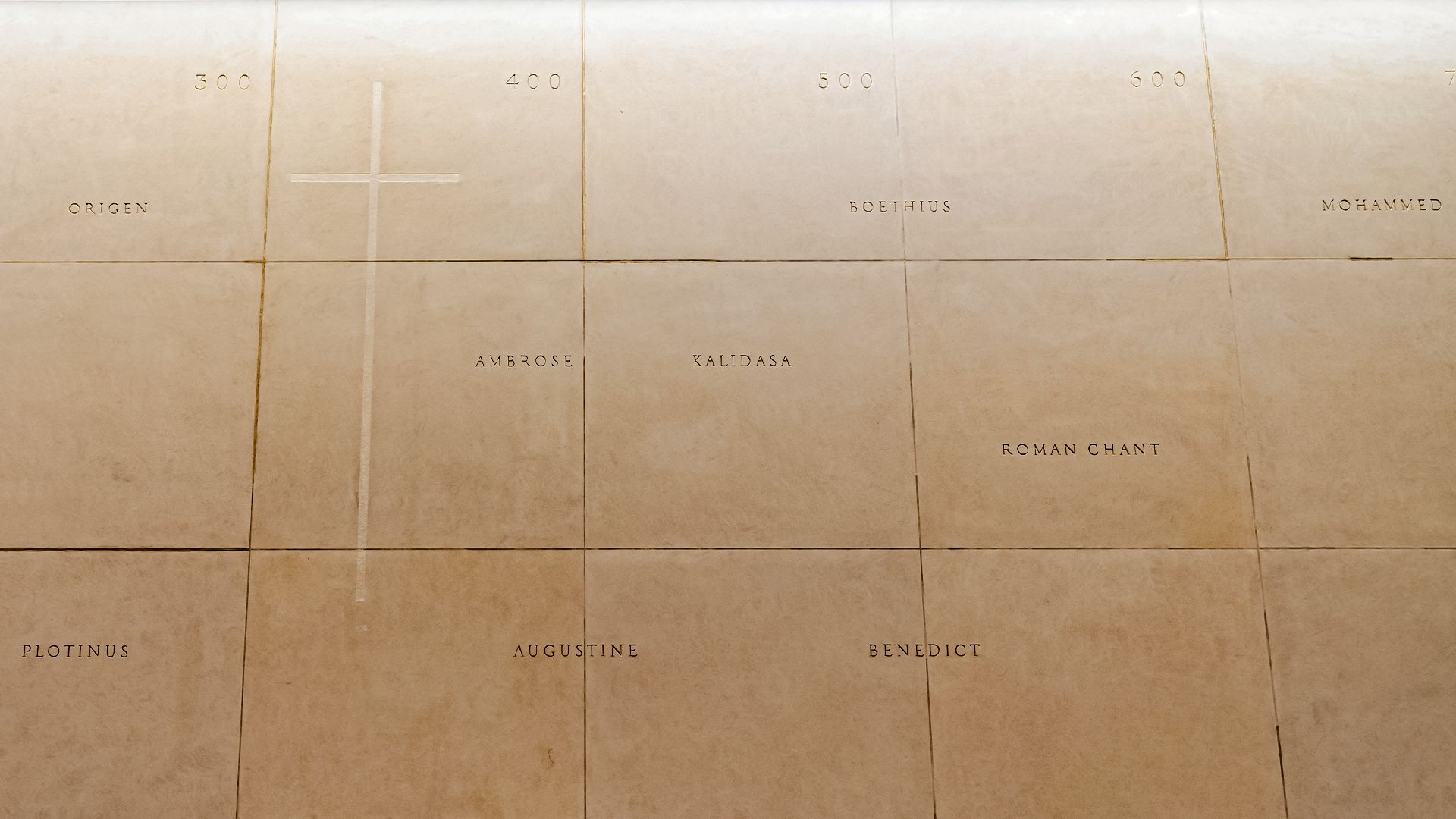
Boethius
Anicius Manlius Severinus Boethius (c. 480 – 524/525 CE) was a Roman philosopher, government official, and Christian thinker who helped bridge the classical and medieval worlds. Born into the distinguished aristocratic family of the Anicii, Boethius received a classical education and became fluent in both Latin and Greek. He held high political office under Theodoric the Great, ruler of the Ostrogothic Kingdom in Ita
354 CE, Thagaste, Numidia (modern Algeria) — 430 CE, Hippo Regius, North Africa
Augustine
Augustine (Aurelius Augustinus, 354–430 CE) was a North African theologian, philosopher, and bishop whose writings shaped Western Christianity and Latin thought. Born in Thagaste (present-day Souk Ahras, Algeria), Augustine received a classical education in rhetoric at Carthage, taught in Rome and Milan, and converted to Christianity in 386 under Ambrose’s influence. After returning to Africa, he became bishop of Hip
Around 340 AD, in Trier, part of Roman Gaul (modern-day Germany) — 397 AD, in Milan, Italy
Ambrose
• Champion of Church Independence: Ambrose stood firm on the principle that the emperor was subject to the Church in spiritual matters. His most famous confrontation was with Emperor Theodosius, whom he refused to admit to communion until the emperor repented publicly for a massacre.
c. 4th–5th century CE — Unknown; traditionally believed to have lived during the Gupta Empire, possibly in Ujjain
Kalidasa
Kalidasa is widely regarded as one of the greatest poets and dramatists in Sanskrit literature. He is often called the “Shakespeare of India.” While the exact identity of Kalidasa and his time period remain a subject of scholarly debate, many scholars believe that he lived during the 4th or 5th century CE, although others suggest different timelines. Due to the lack of concrete biographical information, much about hi
Historical profile
Roman Chant
Old Roman Chant is the liturgical plainchant tradition of the early Christian Church in Rome. It is regarded as the direct precursor of Gregorian chant, forming a core component of the Roman Rite. Its melodies and traditions took shape before the seventh century, transmitted primarily through oral tradition, and later notated between the 11th and 13th centuries. The practice developed in the context of Rome’s central
480, in Nursia, Italy. — 547 (at age 67) in Monte Cassino
Benedict
Saint Benedict, also known as Benedict of Nursia, is a Christian monk and a renowned figure in the field of philosophy. He is primarily known for his significant contributions to ethical theory and political philosophy. The exact details of his life remain shrouded in mystery, with conflicting accounts regarding his birthplace and upbringing. However, most scholars believe that he was born on March 2, 480, in Nursia,
GSR-Wall 300-0-BC 20Nov2025
GSR-Wall-500-800-AD 20Nov2025
←
Back to room