Agora Agent
ca. 2000 BCE — ca. 1860 BCE
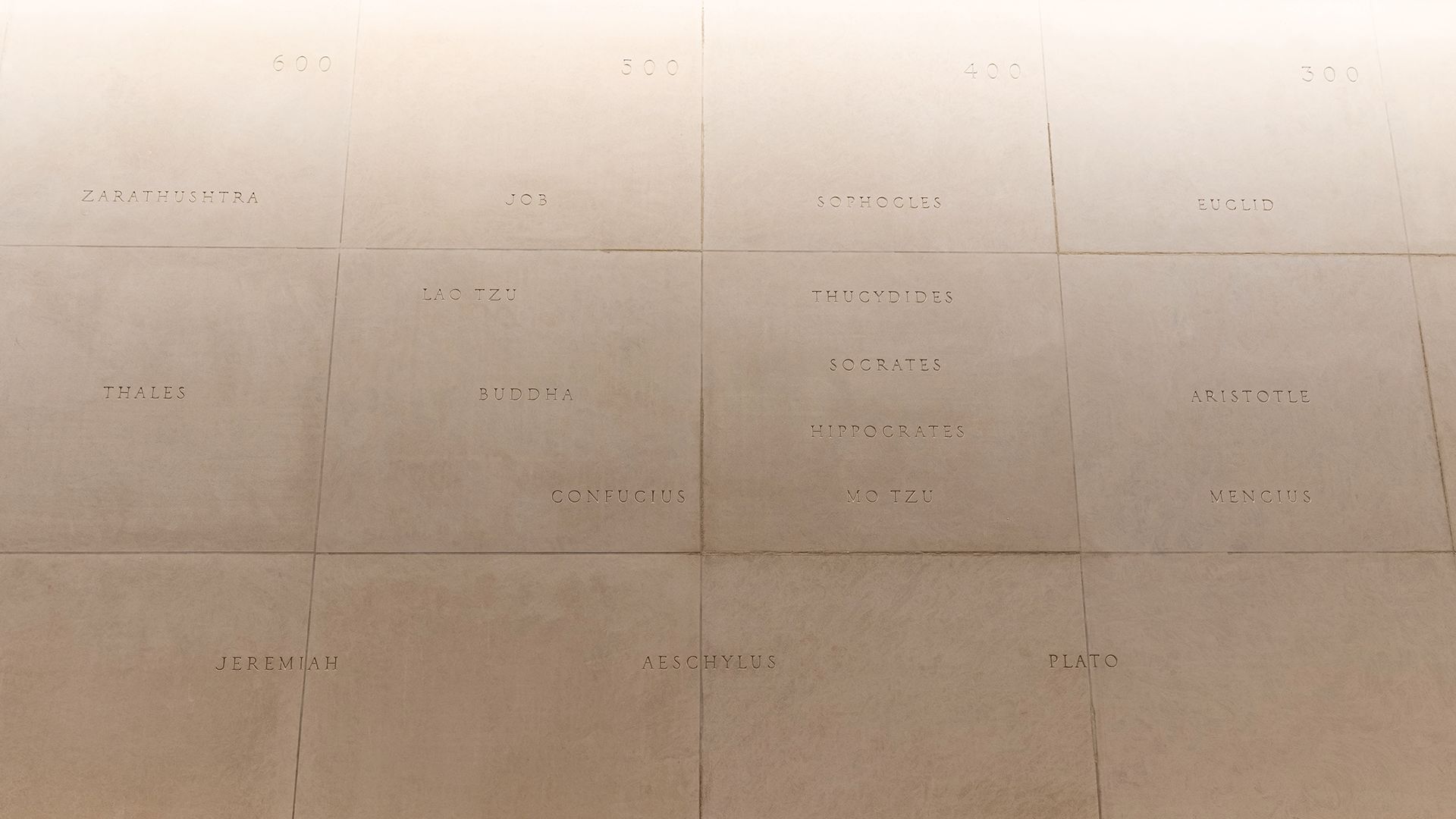
Job
Job is the central figure of the Book of Job in the Hebrew Bible and a prophet in Islam known as Ayyūb. Introduced as a prosperous and righteous man in the land of Uz, Job is continually tested in a bet between God and Satan. Known for his integrity and devotion to God, Job is described as ‘blameless,’ making his suffering a well-known literary tragedy. Structured between a prose prologue and epilogue, the Book of Jo
c. 7th–6th century BCE, likely in eastern Persia (modern-day Iran) — Unknown, possibly in Persia
Zarathushtra
Zarathushtra, also known as Zoroaster, was an ancient Iranian prophet and religious reformer, regarded as the founder of Zoroastrianism, the world’s oldest known monotheistic faith. Zarathushtra was born around the 2nd millennium BCE in eastern Iran (conservative estimates place his birth around c. 1000 BCE). Born into a family of priestly or noble status, Zarathushtra was educated from a young age and became a pries
c. 497/6 BCE, Colonus, Attica (modern-day Greece) — c. 406/5 BCE, Athens, Greece
Sophocles
Master of Greek Tragedy : Sophocles, one of the three great ancient Greek tragedians, is celebrated for his innovative contributions to drama, including the introduction of a third actor and complex character development, as seen in works like Oedipus Rex and Antigone .
323 BCE in Alexandria, Egypt — 265 BCE in Alexandria, Egypt
Euclid
Euclid was a Greek mathematician active around 300 BCE, best known for authoring Elements , one of the most influential works in the history of mathematics. While biographical details are sparse, he is believed to have taught and conducted research at the Library of Alexandria. Euclid drew on earlier work by mathematicians like Eudoxus, Pythagoras, and Theaetetus, organizing their discoveries into a deductive system
Around 624 BCE in Miletus, Ionia (present-day Turkey) — Around 546 BCE (at age 78)
Thales
Thales was a pre-Socratic ancient Greek philosopher from Miletus (modern-day Turkey). He is one of the Seven Sages of ancient Greece and is considered to be one of the first Western philosophers and founding figures in ancient Greece. While much of his early life remains lost in history, he is believed to have lived around 624–546 BCE. Thales is considered to be one of the first to have been engaged in various fields
Goodrich collection
Lao Tzu
Lao Tzu teaches that the least coercive power is the most enduring. By teaching that order arises from restraint, humility, and non-domination rather than force, he articulated a radical insight—that freedom is preserved when rulers govern lightly and allow human life to unfold without compulsion.
c. 6th–5th century BCE, Lumbini, Shakya Republic (modern-day Nepal) — c. 5th century BCE, Kushinagar, Malla Republic (modern-day India)
Buddha
Founder of Buddhism : Siddhartha Gautama, known as the Buddha, established Buddhism through his teachings on the Four Noble Truths and the Eightfold Path, guiding individuals toward enlightenment by overcoming suffering and desire.
c. 460 BCE, Alimos, Athens (modern-day Greece) — c. 400 BCE, possibly in Athens, Greece
Thucydides
Chronicler of the Peloponnesian War : Thucydides, an Athenian historian, is renowned for his meticulous and analytical account of the Peloponnesian War, emphasizing factual accuracy and human motivations in his seminal work, History of the Peloponnesian War .
470 BCE in Deme Alopece, Athens, Greece — 399 BCE (age 71), Athens
Socrates
• Socrates’ emphasis on self-examination and the search for truth through dialogue laid the foundation for Western philosophy and influenced later thinkers such as Plato and Aristotle.
384–322 BCE · Philosophy
Aristotle
Connects careful observation and logical reasoning to questions about ethics, politics, living things, and human flourishing.
c. 551 BCE, Lu State, Zou (modern-day Shandong, China) — c. 479 BCE, Lu State (modern-day Shandong, China)
Confucius
Founder of Confucian Wisdom : Confucius, known as Kongzi, established Confucianism, a philosophical and ethical system emphasizing moral virtue, social harmony, and filial piety, shaping Chinese culture and governance through teachings like the Analects.
circa 470 BCE, State of Lu, Ancient China — circa 391 BCE
Mo Tzu
Mo Tzu (Mozi, Mo Di, Micius, c. 470–391 BCE) was a Chinese philosopher and the founder of Mohism, a school of thought that emerged during the tumultuous Warring States period. Born in the State of Lu (present-day Shandong province), Mozi likely received a Confucian education before developing his own philosophical system. He traveled widely, offering counsel to rulers and advocating for social reforms based on impart
ca. 372 BCE, State of Zou, ancient China (modern-day Shandong Province) — ca. 289 BCE, likely in the State of Song, ancient China
Mencius
Mencius, also known as Mengzi or Meng-tzu, was one of the influential Chinese Confucian philosophers who lived during the Warring States period. He is considered one of the most important Confucian thinkers after Confucius himself (often referred to as the Second Sage). Mencius was born in the state of Zou (now known as Shandong Province) in 371 BCE and is believed to have died around 289 BCE. Little is known about h
c. 7th century BCE, likely in Anathoth, Judah (modern-day Israel) — Unknown, possibly in Egypt
Jeremiah
Prophetic Voice of Judah’s Covenant : Jeremiah is renowned for his impassioned calls for repentance and warnings of divine judgment against Judah’s unfaithfulness. His messages, often delivered through symbolic acts, emphasized God’s covenant and the consequences of straying from it.
circa 525 BCE, Eleusis, Ancient Greece — circa 456 BCE, Gela, Sicily
Aeschylus
Aeschylus was an ancient Greek playwright known for writing powerful tragedies. He is often referred to as the “father of tragedy” for his transformative contributions to the development of Greek theater, particularly in the area of tragedy. Aeschylus was born around 525 BCE in Eleusis, a small town near Athens.
427 BCE, Athens (possibly during the Peloponnesian War) — 347 BCE, Athens
Plato
Plato (c. 428/427–348/347 BCE) was a Greek philosopher, writer, and foundational figure in Western philosophy. A student of Socrates and teacher of Aristotle, Plato founded the Academy in Athens, the first institution of higher learning in the Western world. His writings—mostly in the form of philosophical dialogues—explored ethics, politics, metaphysics, epistemology, art, and education. After the Trial of Socrates,
GSR-Wsll-900-800-700-BC-20Nov2025
GSR-Wall 300-0-BC 20Nov2025
c. 460 BCE, Kos, Greece — c. 370 BCE, Larissa, Greece
Hippocrates
Pioneer of Medical Science : Hippocrates revolutionized medicine by introducing systematic observation and diagnosis, emphasizing natural causes of disease over supernatural explanations.
←
Back to room